Psychology recognizes two types of coping: emotion-focused and problem-focused coping.
1, Problem-focused coping
Problem-based coping means that we actively try to solve the problem when faced with a difficult situation. We can do this by collecting solutions (brainstrorming), considering different alternatives (positives, negatives), analyzing the advantages and disadvantages, and acquiring and developing the missing skills needed to solve the problem. We usually use these methods when we are able to resolve the issue.
2, Emotion-focused coping
If we don’t have a way to solve it, we can apply emotion-focused coping. Humor, faith, talking about the problem, seeking social support, exercising, changing the meaning of the situation in our minds (reframing), temporarily avoiding the problem can all be applied as adaptive coping. There are as well maladaptive emotion-focused coping methods such as smoking, alcohol or drug consumption etc.
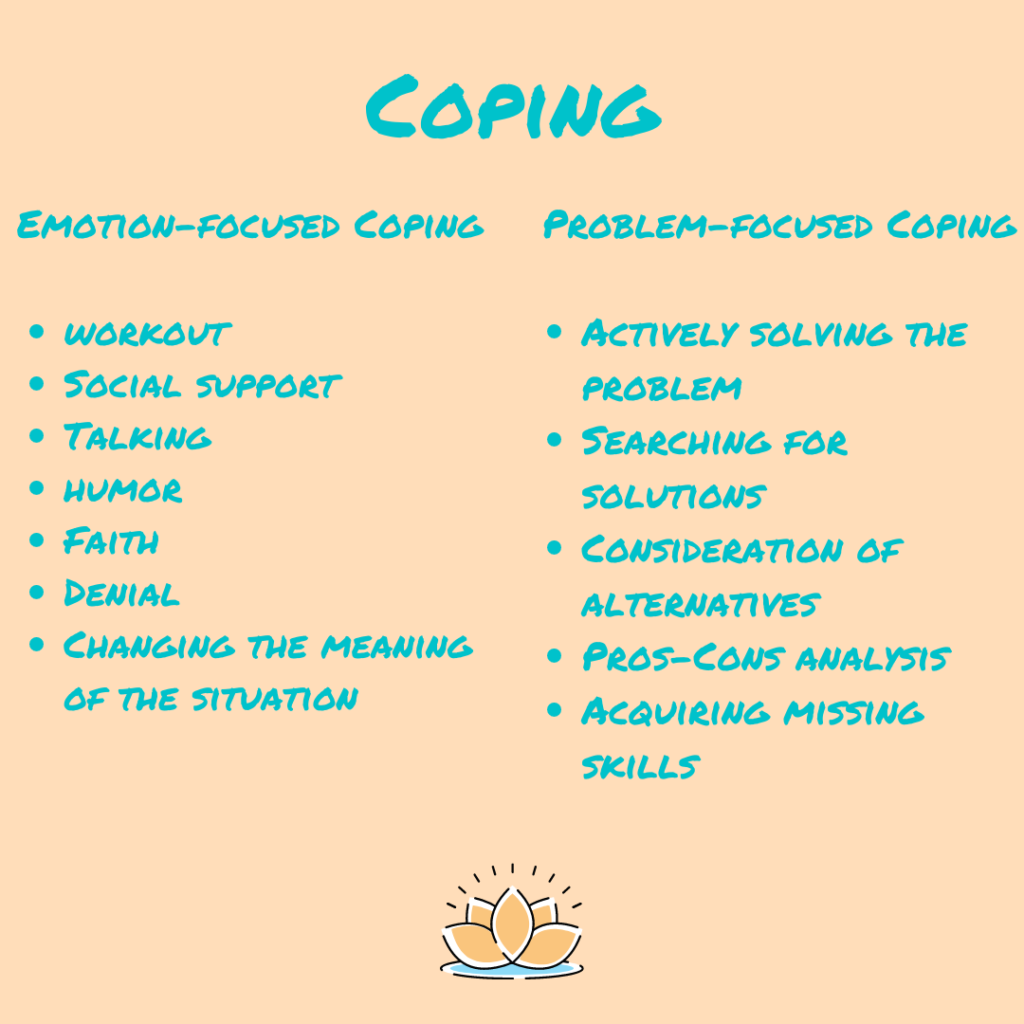
We all use both of these coping strategies. When we have control over the situation we may use problem-focused coping. For example, if my fridge does not work suddenly, I try to find a service to repair it, or I try to fix it.
Although, problem-focused coping may solve a lot of our issues, sometimes we do not have any control over the problem. If I am being diagnosed with a severe illness, I cannot solve it by myself, so I choose an emotion-focused coping strategy, such as asking for social support and talking.
- The 4 horsemen of Apocalypse that ruin your relationship
- Why Do I Feel Lonely Even in a Crowd? – Emotional Deprivation Schema
- The Inner Battlefield: Why Our Desires and Inner Rules Are Constantly at War?
- Failure Schema.Finding yourself stuck in a cycle of procrastination, or feeling like an “imposter” despite your success? You might be dealing with a Failure Schema.
- Ismerd meg a Boldog Gyermeked – A belső öröm forrása benned él
 English
  Magyar